Solar Air Heater Technology

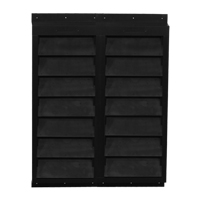
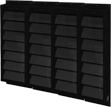
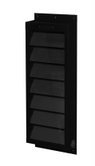
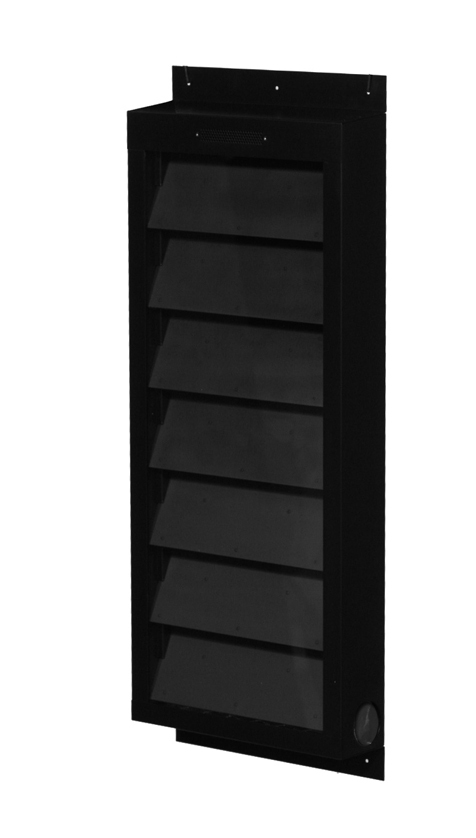
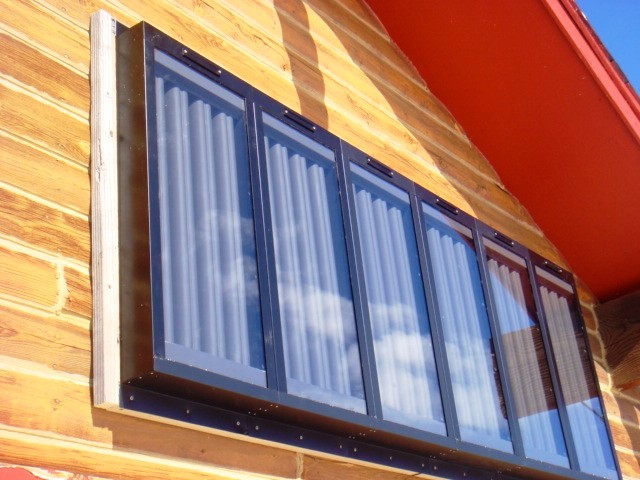
The patented technology (7,434,577) of our 1536 Solar Air Heater series sets a new industry standard for the solar air heater industry. Each collect insert has a combined surface area of 2.125 square feet. Additionally, the combined 7 inserts in each Solar Air Heater module equals 14.875 square feet of energy to heat transfer in a smaller, easy to handle and install unit.
A second patented benefit is the angle of each insert which creates a separate partition between each insert. The benefit is clear; when room air first enters the first 1536 module it must pass thru the first collector insert surface. Continuing to the second, third, and so on to the seventh collector insert. Hence the terminology, “Step-wise Heating™”.
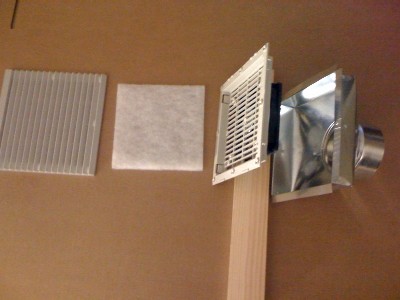
When the air passes thru the first Solar Air Heater module it’s preheated by each partition. The air passes to the second module and travels in the same fashion only up each individual insert instead of down like the first module. Then, over to the next module down each insert and then to the next module and up and thru each insert back into the room.
You can combine as many 1536 Solar Air Heater modules to accommodate your heating requirements. Because of the up down and over design, 1536 modules must be purchased in pairs (2 ea). There is no limit to your array of modules.
This make for the most efficient solar air heater system in North America.

Solar Air Heater 1536 - Utah


order
Solar Gain - Tilt Angular vs. Flat Plate for a Solar Air Heater

Our Solar Air Heater "Step-wise Heating™” technology by design is angled.
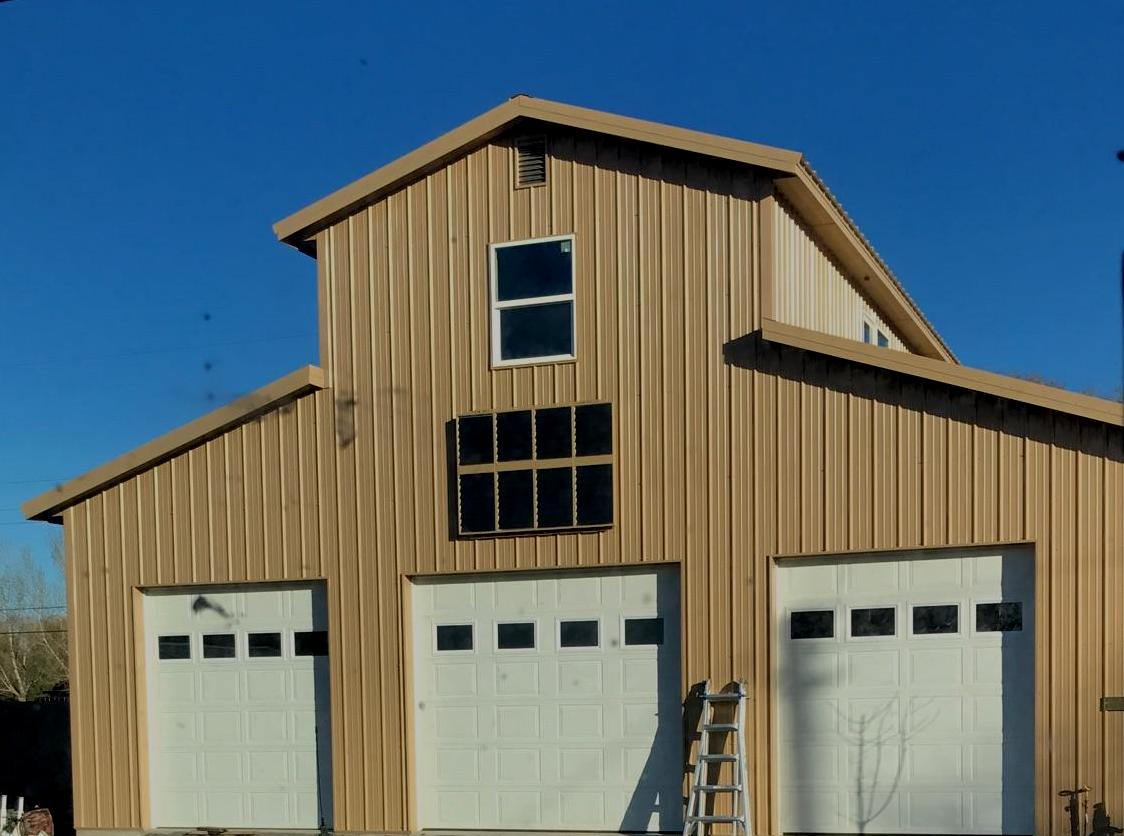
The Patented Solar Air Heater Technology includes a built in angle over 22 degrees when mounted to the side of a structure. The advantage of this built in angle over all other solar air heaters will be obvious when using the NREL Solar calculator.
The U.S. Department of Energy (DOE) for renewable energy and energy efficiency research, development and deployment has a wonderful new research tool.
This research tool enables consumers to view energy savings and efficiency by geographical location including angle array.
Users can select a location and choose to use default values or their own system parameters for size, electric cost, array type, tilt angle, and azimuth angle. In addition, the PVWatts calculator can provide hourly performance data for the selected location.
You can see the efficency of our advanced "Step-wise Heating™” technology when determining solar gain angle. After your report is generated, simply change the array angle to 22.5 degrees and click on calculate.
Click here for your energy savings and compare flat plate solar air heaters to our built-in angular system!
Solar Air Heater Technology.
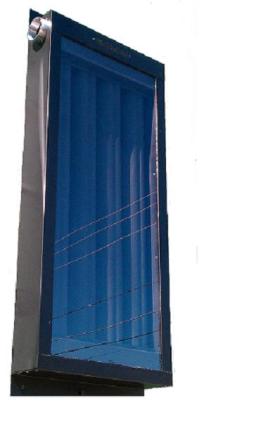
The 1500 Series is a module array heater assembly with step-wise heating technology™ providing heating of air in a step-wise manner. The housing, comprising of a front panel of light-transmitting 3/16" low iron clear glass, one or more air inlets and one or more air outlets for establishing a flow path for the air to be heated, and a series of several partitions. The partitions being essentially parallel to each other creating essentially isolated sections within the housing between the partitions. Each partition has a longitudinal axis and a normal axis, the normal axis being perpendicular to the glass of the partition, each partition comprises a plurality of parallel channels permitting adjacent essentially isolated sections to be in fluid communication and said fluid communication is through each partition. The fluid communication between the adjacent essentially isolated sections and through the partitions is along a route perpendicular to the normal axis of each of the partition and perpendicular to the longitudinal axis of each partions.
The partition(s) of the enclosure contact the side panels perpendicularly and contact the front and back panels at a non-perpendicular angle. Furthermore, the partitions of the 1500 Series comprise a plurality of channels allowing adjacent sections to be in fluid communication with each other. The channels are small enough in diameter to prevent any significant back flow of air. This design not only solves the older style solar air heater problem of incoming cold air mixing with the heated air within the heater but also provides the unsuspected benefit of increased heater efficiency by heating the air in a step-wise manner. This step-wise heating of the air, where the heated air of one section provides the starting air of the next adjacent section, results in a greater temperature gain as compared to a similar sized device not incorporating the step-wise heating technology™ of the 1500 Series.
|